



RSK4
RSK4 (RPS6KA6) is a member of the p90 ribosomal S6 kinase family and functions as a serine/threonine kinase downstream of MAPK/ERK signaling, while exhibiting distinctive regulatory properties compared with other RSK isoforms[1][2]. Mechanistically, RSK4 acts as a negative regulator of receptor tyrosine kinase signaling by suppressing fibroblast growth factor (FGF)-RAS-ERK pathway activity and inhibiting ERK-dependent transcriptional responses, thereby contributing to control of cellular proliferation and differentiation[1][3]. Consistent with this role, RSK4 has been linked to p53-dependent growth arrest and p21-associated cell-cycle regulation, supporting its function in growth suppression and cellular senescence programs[4][5][6]. In disease settings, altered RSK4 expression has been reported in multiple malignancies, including acute myeloid leukemia, colorectal cancer, endometrial cancer, renal cell carcinoma, breast cancer, and non-small cell lung cancer, highlighting its relevance to tumor biology and cancer progression[7][8][9]. Compared with other RSK family members that generally require growth-factor stimulation for activation, RSK4 displays constitutive kinase activity under serum-starved conditions and may not participate in identical signaling networks, indicating a unique mode of regulation within the RSK family[2][8]. For experimental research, RSK4 is therefore widely used as a model for investigating ERK-feedback regulation, p53-associated growth arrest, cellular senescence, and context-dependent tumor suppressor mechanisms[1][4][5].
References:
- [1]. Myers AP, et al. Characterization of mouse Rsk4 as an inhibitor of fibroblast growth factor-RAS-extracellular signal-regulated kinase signaling. Mol Cell Biol. 2004 May;24(10):4255-66. [Content Brief]
- [2]. Kim M, et al. Inhibition of ERK-MAP kinase signaling by RSK during Drosophila development. EMBO J. 2006 Jul 12;25(13):3056-67. [Content Brief]
- [3]. Zhu J, et al. RSK4 knockdown promotes proliferation, migration and metastasis of human breast adenocarcinoma cells. Oncol Rep. 2015 Dec;34(6):3156-62. [Content Brief]
All Product Categories
-
RSK4 Related Products (6)
Related Products (6)

-
Antibodies (1)
-
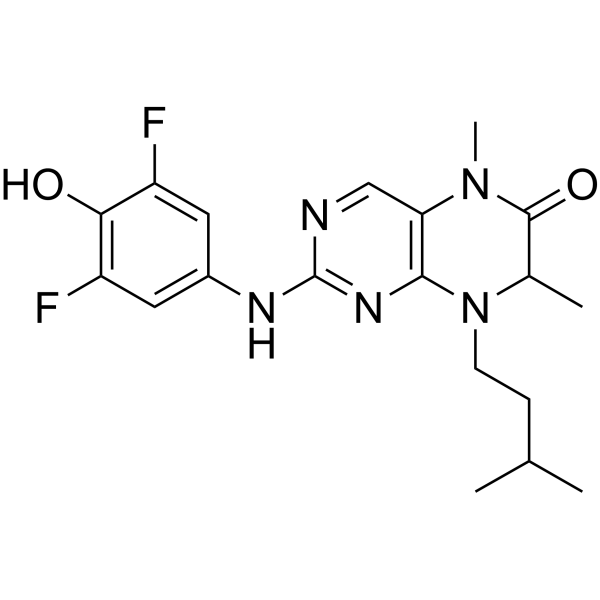
RSK4-IN-1 TFA
 0 ImagesCat. No.: HY-132891ARSK4-IN-1 TFA is a potent RSK4 inhibitor with a IC50 value of 9.5 nM. RSK4-IN-1 TFA has antitumor activity.

-
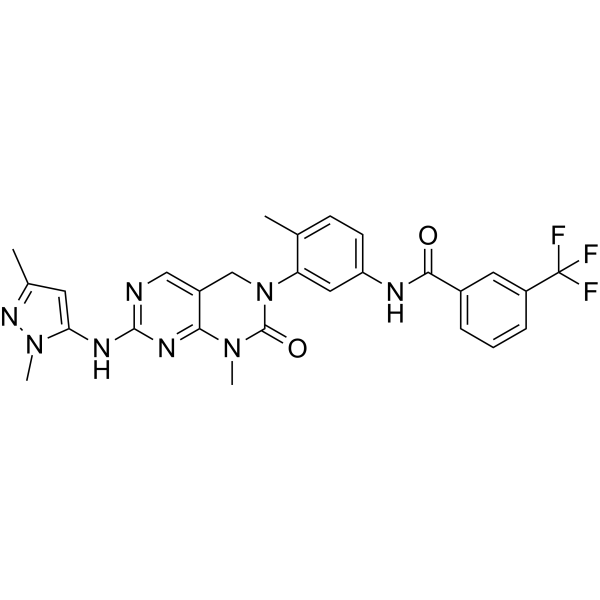
RSK4-IN-2
 0 ImagesCat. No.: HY-180897CAS No.: 3034203-03-4RSK4-IN-2 (compound 16o) is a potent, orally active RSK4 inhibitor with an IC50 of 17 nM. RSK4-IN-2 suppresses esophageal squamous cell carcinoma (ESCC) cell growth and invasion, by inhibiting phosphorylation of RSK4 downstream targets. RSK4-IN-2 inhibits tumor growth and metastasis in ESCC mouse models. RSK4-IN-2 can be used for ESCC research.




